

Relocating your family involves far more than packing boxes and changing your address. A successful move requires careful planning around housing, education, childcare, utilities, cleanup, and the many practical details that come with establishing a new home. When several family members are involved, each decision can affect daily routines, finances, commuting, and long-term comfort.
The process becomes easier when you break it into manageable stages. Instead of trying to solve every issue at once, focus on the most important decisions first, then work through the smaller tasks that support your transition. Planning ahead can help reduce unnecessary stress while giving your family more time to adjust to a new neighborhood, school system, and household routine.
Whether you are moving across town or relocating to another state, the following steps can help you organize the transition and create a home that feels functional from the beginning.
Start With a Detailed Moving Plan
A clear moving plan gives your family a central reference point for deadlines, responsibilities, and important decisions. Begin by establishing your moving date, budget, transportation needs, and a list of tasks that must be completed before you leave your current home. This can include notifying schools, changing your address, transferring utilities, scheduling service appointments, and organizing important documents.
If your move is nearby, local movers may help simplify transportation while allowing you to focus on your family and other relocation tasks. When comparing moving companies, ask about scheduling, packing options, insurance coverage, storage availability, and any fees that may apply to larger or specialty items. Confirming these details early can prevent last-minute surprises.
Families relocating to another region may need to research long distance moving companies instead. These moves usually require more coordination because delivery schedules, travel arrangements, temporary lodging, and interstate transportation may all need to align. Keep essential clothing, medications, paperwork, chargers, children’s comfort items, and basic household supplies with you rather than packing everything onto the moving truck.
Create a shared calendar or checklist so each adult can see what has been completed and what still needs attention. Older children can also take responsibility for age-appropriate tasks, such as packing personal belongings, labeling boxes, or making a list of items they want available immediately after the move.

Research Housing and Home Construction Options
Finding the right home is one of the largest decisions involved in relocation. Families should consider more than the number of bedrooms or the appearance of a property. Commute times, school access, neighborhood layout, storage, outdoor space, nearby services, and future household needs can all influence whether a home remains practical over time.
Some families choose an existing home because they want a faster transition. Others may explore home building services when they have specific goals for layout, accessibility, energy efficiency, storage, or future expansion. Building a home can provide more control over the finished space, but it also introduces decisions involving land, permits, materials, timelines, contractors, and design selections.
Before committing to a construction project, establish a realistic budget that accounts for more than the base price. Site preparation, landscaping, utility connections, appliances, fixtures, permits, and upgrades can add to the total cost. Ask builders for detailed estimates and written explanations of what is included.
If you are moving before construction is complete, consider where your family will live temporarily and where furniture or household items will be stored. A temporary housing plan can make the transition more manageable if there are delays or if your move-out date does not align perfectly with your new home’s completion.
It can also help to think several years ahead. A home that works well today may become less practical as children grow, relatives move in, or work arrangements change. Flexible rooms, adequate storage, accessible entrances, and adaptable living spaces can make a property easier to use as family needs evolve.
Compare Education Options Before the Move
School research should begin as early as possible, especially when children will be entering a new district during the academic year. Review enrollment requirements, transportation, class sizes, extracurricular activities, academic programs, special education resources, and before- or after-school options.
Families with younger children may want to compare nearby elementary schools based on educational programs, communication practices, schedules, and available support services. Visiting schools when possible can help parents understand the environment and give children a chance to become familiar with their future surroundings.
Some families may also research the best Montessori schools in their new area. Montessori programs typically use a distinct educational approach that emphasizes independence, hands-on learning, and mixed-age classrooms. Because individual schools may differ in curriculum, accreditation, schedules, and tuition, parents should review each program carefully rather than assuming every Montessori school operates the same way.
Other families may prefer home school programs because of scheduling needs, travel, educational preferences, or a desire for greater flexibility. Requirements for homeschooling vary by location, so review applicable state or local rules before making a decision. Comparing curriculum options, instructional support, social opportunities, and recordkeeping requirements can help families determine whether a program fits their needs.
Try to compare schools using factors that matter to your child rather than relying on a single rating or reputation. Consider teaching style, student support, transportation time, extracurricular opportunities, and how effectively the school communicates with families. A good fit often depends on the individual student’s learning needs, personality, and daily routine.
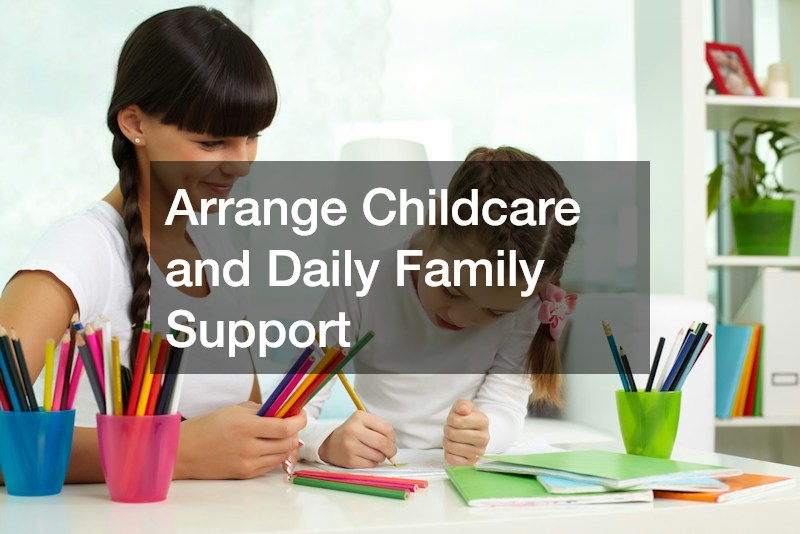
Arrange Childcare and Daily Family Support
Childcare is another important part of settling into a new community. Parents who work outside the home, work remotely, attend school, or manage irregular schedules may need reliable care in place soon after moving.
Begin researching daycare services before your relocation date when possible. Some providers have limited openings or waiting lists, particularly for infants and toddlers. Ask about operating hours, enrollment requirements, staff qualifications, meals, nap schedules, transportation, communication with parents, and policies for illness or emergency closures.
Location is also important. A daycare near your home may be convenient for remote workers, while a facility closer to work or school might better support a family’s commuting routine. Consider how pickup and drop-off will fit into the schedules of everyone responsible for transportation.
Beyond formal childcare, families may benefit from identifying babysitters, pediatricians, pharmacies, libraries, recreation centers, and community programs. Building this support network early can make a new area feel more manageable. It also gives children opportunities to establish routines and relationships outside the home while parents become familiar with their surroundings.
Declutter Before Packing and Unpacking
Moving is an ideal time to decide what your family actually wants to keep. Transporting unwanted furniture, broken equipment, unused toys, outdated electronics, and other clutter adds work and may increase moving costs.
Sort belongings by room and separate items into categories for keeping, donating, selling, recycling, or disposal. Give yourself enough time to make decisions without rushing. Children can participate by choosing toys, clothing, and books they still use while identifying items they have outgrown.
For larger cleanouts, junk removal services can help remove bulky or unwanted materials that are difficult to transport independently. This may be useful when clearing basements, garages, attics, sheds, or storage areas before putting a home on the market or handing over the keys.
Decluttering can also make unpacking easier. When fewer unnecessary items arrive at the new house, you can organize rooms more efficiently and reduce the number of boxes competing for limited storage space. Label boxes by both room and contents, and consider marking essential boxes that should be opened first.
A more selective packing process can help your new home feel organized sooner rather than turning unused rooms, closets, or garages into long-term storage areas.
Measure large furniture before moving it to avoid paying to transport pieces that will not fit through doorways or work in the new layout. Floor plans and room measurements can help you decide what belongs in each space before the truck arrives, reducing unnecessary rearranging once unloading begins.

Plan for Renovation and Construction Waste
A new home may need repairs, remodeling, landscaping, or other improvements before it fully meets your family’s needs. Even relatively small projects can generate surprising amounts of debris, packaging, old materials, and household waste.
Affordable dumpster rentals can provide a practical disposal option when a project involves flooring, cabinetry, drywall, roofing materials, yard debris, or a large household cleanout. Before renting a container, ask about available sizes, rental periods, weight limits, prohibited materials, delivery requirements, and pickup procedures.
Think carefully about placement as well. The container should be accessible without blocking household entrances, creating unnecessary traffic problems, or interfering with contractors. Some neighborhoods or municipalities may have rules regarding dumpster placement, especially when a container will sit on a public street.
If you are completing several projects, coordinate disposal with the construction schedule. Having a waste plan in place from the beginning can help keep work areas safer and more organized. It can also prevent piles of debris from accumulating around the property while your family is trying to unpack and establish normal routines.
For do-it-yourself projects, review disposal rules before placing materials in a dumpster. Paint, batteries, chemicals, electronics, appliances, and other restricted items may require separate handling. Knowing those requirements in advance can prevent delays and help your family plan safer, more responsible cleanup throughout the project.
Prepare for Temporary Utility and Sanitation Needs
Major renovations, new construction, utility work, and outdoor projects can temporarily change how your household uses the property. Planning for basic sanitation and convenience is especially important when bathrooms are unavailable or workers will be on-site for an extended period.
Local portable toilet rentals may be useful during larger remodeling or construction projects, particularly when plumbing is disconnected or contractors need facilities without regularly entering the occupied portion of the home. Ask rental providers about unit types, placement requirements, cleaning schedules, delivery access, and servicing frequency.
Temporary needs can extend beyond sanitation. Depending on the project, your family may need portable storage, temporary fencing, additional lighting, extension cords rated for outdoor use, or alternative parking arrangements. Discuss these needs with contractors before work begins so the property remains functional and safe.
Families living in the home during construction should also establish clear boundaries between work areas and everyday living spaces. Keep children and pets away from tools, debris, unfinished surfaces, and active construction zones. A little planning can make temporary disruptions easier to manage while keeping the project moving forward.
If contractors will be arriving early or working over several days, discuss access, parking, noise, and cleanup expectations before the project starts. Clear expectations can reduce disruptions for your household and neighbors while making it easier to maintain predictable routines during construction.

Establish Routines in Your New Community
Once the boxes are unpacked and major household tasks are under control, focus on creating routines that help your family feel settled. Familiar schedules can give children a sense of stability after the disruption of moving, while adults benefit from knowing how daily responsibilities will fit together.
Start by identifying the places your family will use regularly, such as grocery stores, schools, childcare facilities, medical offices, parks, libraries, and community centers. Test commuting routes at the times you will actually use them so you can account for traffic and adjust your schedule when necessary.
Introduce yourselves to neighbors when it feels appropriate and explore local events, recreation programs, sports leagues, clubs, or volunteer opportunities. These activities can help family members establish new social connections and learn more about the community.
At home, prioritize the rooms that support daily life. Bedrooms, bathrooms, the kitchen, and a comfortable family area usually matter more during the first few days than perfectly decorating every space. Set up familiar belongings, photographs, toys, and routines so the new house begins to feel recognizable.
Relocation is rarely completed the moment the moving truck leaves. Families often need several weeks or months to learn new routines, make connections, and adjust to their surroundings. By organizing the move carefully, researching education and childcare, managing household projects, and planning for practical services, you can create a smoother transition and give your family a strong foundation in its new home.